
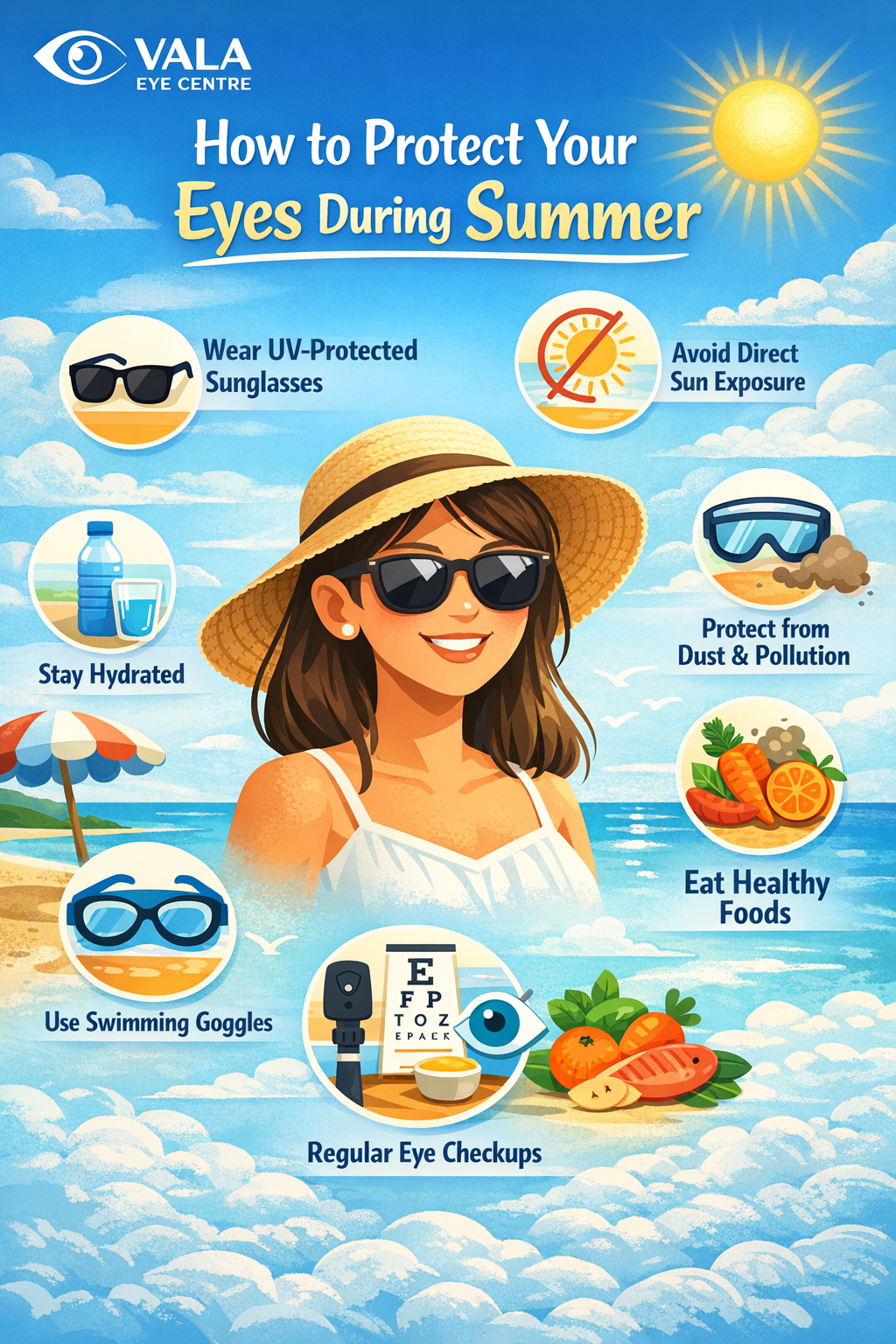
Summer brings longer days, bright sunshine, and outdoor activities, but it also exposes your eyes to harsh environmental conditions. Increased sunlight, heat, dust, and pollution can significantly impact eye health if proper care isn’t taken. Many people experience common issues like dryness, irritation, redness, and even infections during this season.
At Vala Eye Centre, we often see a rise in eye-related complaints during summer months. The good news is that with the right precautions and habits, you can effectively protect your eyes and maintain clear, comfortable vision.
In this blog, we’ll walk you through expert-backed tips on how to protect your eyes during summer, ensuring optimal eye health throughout the season.
Why Eye Care is Important in Summer
Before diving into preventive measures, it’s important to understand why summer can be particularly harsh on your eyes:
- Increased UV exposure can damage the eye’s surface and internal structures
- Dry air and heat lead to eye dryness and irritation.
- Dust and allergens can trigger infections and allergies.
- Swimming pools may expose eyes to chlorine and bacteria.
Ignoring these factors can lead to conditions such as dry eyes, conjunctivitis, photo keratitis (sunburn of the eye), and long-term vision problems.
1. Wear UV-Protected Sunglasses
One of the most effective ways to protect your eyes during summer is by wearing high-quality sunglasses.
Why it matters:
Prolonged exposure to ultraviolet (UV) rays can increase the risk of:
- Cataracts
- Macular degeneration
- Photo keratitis
What to look for:
- Sunglasses that block 100% UVA and UVB rays
- Polarized lenses for glare reduction
- Wrap-around styles for maximum protection
Wearing sunglasses isn’t just a style statement, it’s essential eye protection.
2. Stay Hydrated to Prevent Dry Eyes
Dehydration is common in summer and can directly affect your eyes.
Symptoms of dry eyes:
- Burning sensation
- Redness
- Blurry vision
- Sensitivity to light
Tips:
- Drink at least 8-10 glasses of water daily
- Include hydrating foods like cucumber, watermelon, and oranges
- Use artificial tears if recommended by your eye doctor
Proper hydration helps maintain tear production and keeps your eyes comfortable.
3. Avoid Direct Sun Exposure
Just like your skin, your eyes are vulnerable to sun damage.
Best practices:
- Avoid stepping out between 12 PM to 4 PM, when UV rays are strongest
- Wear a wide-brimmed hat or cap along with sunglasses
- Use umbrellas when possible
Limiting direct exposure can significantly reduce the risk of UV-related eye damage.
4. Protect Your Eyes from Dust and Pollution
Summer often brings dusty winds and increased pollution levels, especially in urban areas.
Common problems:
- Eye irritation
- Allergic conjunctivitis
- Infection
Prevention tips:
- Wear protective glasses or sunglasses outdoors
- Avoid rubbing your eyes with unclean hands
- Wash your face and eyes after coming indoors
Maintaining hygiene is key to preventing infections during dusty conditions.
5. Be Careful While Swimming
Swimming is a popular summer activity, but it can pose risks to your eyes.
Potential risks:
- Chlorine irritation
- Bacterial or viral infections
Safety tips:
- Always wear swimming goggles
- Avoid opening your eyes underwater
- Rinse your eyes with clean water after swimming
- Avoid swimming in contaminated water
These simple steps can help prevent eye infections like conjunctivitis.
6. Maintain Proper Eye Hygiene
Good hygiene practices are crucial for eye health, especially during summer.
Do’s:
- Wash hands frequently
- Clean your eyes with fresh water
- Use a clean towel or tissue
Don’ts:
- Avoid sharing towels or eye makeup
- Do not touch or rub your eyes unnecessarily
Poor hygiene can lead to infections that spread easily in warm weather.
7. Limit Screen Time and Follow the 20-20-20 Rule
Increased indoor time often means more screen exposure, which can worsen eye strain.
Symptoms of digital eye strain:
- Dryness
- Headaches
- Blurred vision
Solution:
Follow the 20-20-20 rule:
Every 20 minutes, look at something 20 feet away for at least 20 seconds.
Also:
- Adjust screen brightness
- Use anti-glare screens
- Blink frequently
This helps reduce strain and keeps your eyes refreshed.
8. Eat a Balanced Diet for Eye Health
Nutrition plays a vital role in maintaining healthy eyes.
Include foods rich in:
- Vitamin A (carrots, sweet potatoes)
- Vitamin C (citrus fruits)
- Omega-3 fatty acids (flax seeds, walnuts)
- Lutein and zeaxanthin (leafy greens)
These nutrients help protect against dryness, inflammation, and long-term eye diseases.
9. Use Protective Eyewear During Travel
If you travel frequently during summer, your eyes are exposed to wind, dust, and pollution.
Tips:
- Use sunglasses or protective glasses while riding bikes or driving
- Keep lubricating eye drops handy
- Avoid direct AC airflow hitting your eyes
This is especially important for people living in hot and dry regions.
10. Schedule Regular Eye Checkups
Preventive care is always better than cure.
At Vala Eye Centre, we recommend:
- Routine eye examinations at least once a year
- Immediate consultation if you experience redness, pain, or vision changes
Early detection can prevent minor issues from turning into serious conditions.
Common Summer Eye Problems to Watch Out For
Be aware of these common conditions:
- Dry Eye Syndrome
- Conjunctivitis (Pink Eye)
- Allergic Eye Disease
- Photokeratitis
- Styes and Eye Infections
If you notice persistent symptoms, seek professional care promptly.
When to See an Eye Specialist
Consult an eye doctor if you experience:
- Persistent redness or irritation
- Sudden vision changes
- Eye pain or swelling
- Discharge from the eyes
- Increased sensitivity to light
Delaying treatment can worsen the condition and lead to complications.
Summer can be tough on your eyes, but with the right precautions, you can enjoy the season without compromising your eye health. From wearing UV-protected sunglasses to staying hydrated and maintaining proper hygiene, small lifestyle changes can make a big difference.
At Vala Eye Centre, we are committed to helping you maintain healthy vision all year round. If you have any concerns or need expert guidance, don’t hesitate to schedule an appointment with our specialists.