
The birth of a newborn is a moment of immense joy, but for parents of premature babies, it can also bring unexpected health concerns. One such condition that requires immediate attention is Retinopathy of Prematurity (ROP), a potentially serious eye disorder that affects premature infants.
At Vala Eye Centre, we frequently counsel parents about ROP, its risks, and the importance of early screening. With timely diagnosis and proper treatment, ROP can be managed effectively, preventing long-term vision problems or even blindness. This blog will help you understand everything about retinopathy of prematurity, including causes, symptoms, risk factors, treatment, and prevention.
What is Retinopathy of Prematurity (ROP)?
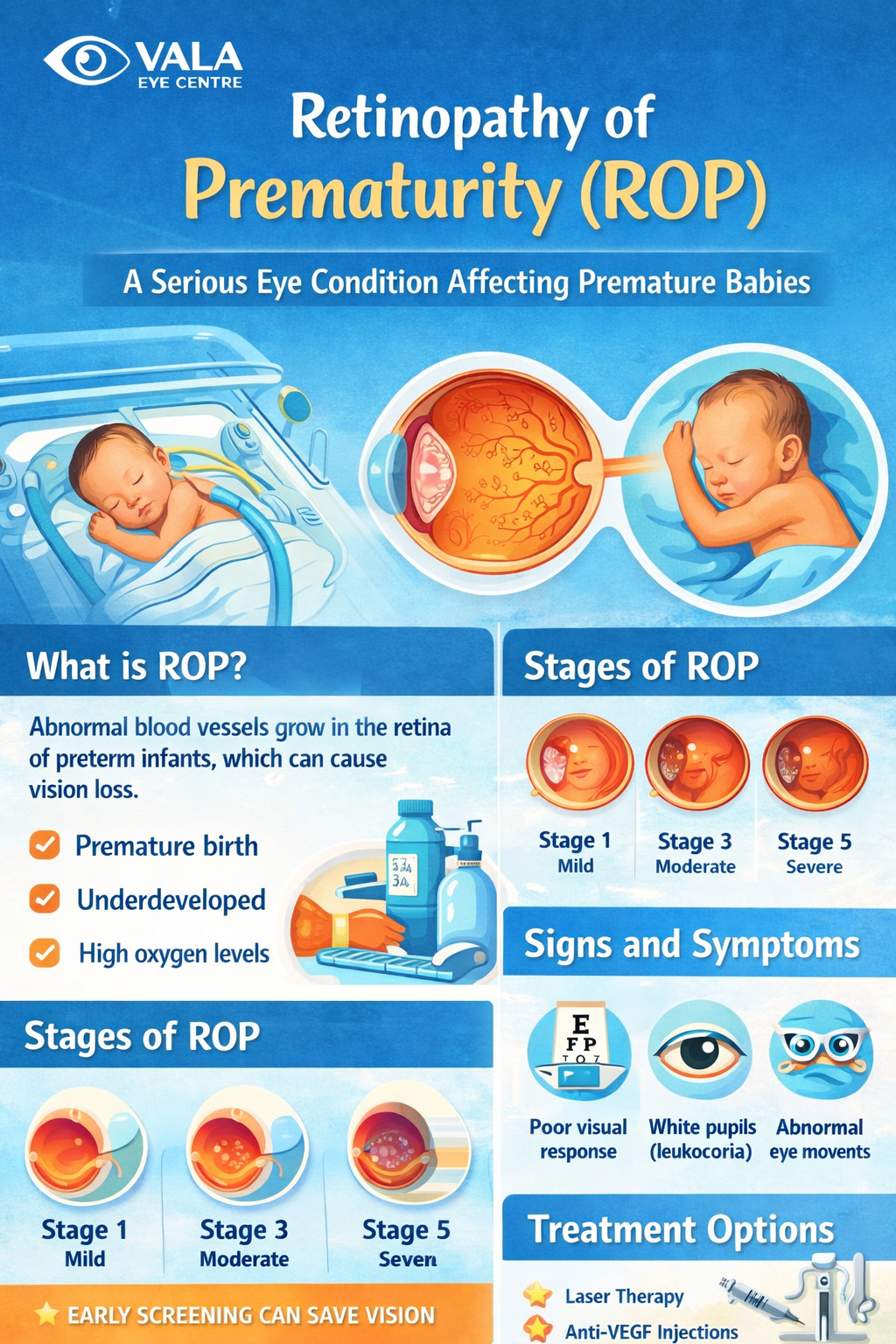
Retinopathy of Prematurity (ROP) is an eye condition that occurs in premature babies where the blood vessels in the retina (the light-sensitive layer at the back of the eye) do not develop properly.
In a full-term baby, retinal blood vessels develop completely before birth. However, in premature infants, this development is incomplete, leading to abnormal growth of blood vessels.
These abnormal vessels can:
- Leak blood
- Cause scarring
- Pull the retina out of place (retinal detachment)
If untreated, severe ROP can lead to permanent vision loss.
Why Does ROP Occur?
ROP is primarily associated with premature birth and low birth weight.
Key reasons include:
- Incomplete retinal development
- Exposure to high oxygen levels after birth
- Medical complications in premature infants
The retina develops fully only in the last weeks of pregnancy. Babies born before this period are at higher risk.
Risk Factors for ROP
Not all premature babies develop ROP, but certain factors increase the risk:
- Birth before 34 weeks of gestation
- Birth weight less than 1500 grams
- Oxygen therapy after birth
- Respiratory distress syndrome
- Infections or other neonatal complications
Parents of high-risk babies must ensure timely eye screening.
Stages of Retinopathy of Prematurity
ROP progresses in stages, ranging from mild to severe:
Stage 1 & 2 (Mild ROP)
- Abnormal blood vessel growth
- Often resolves on its own without treatment
Stage 3 (Moderate ROP)
- More severe abnormal vessel growth
- May require treatment
Stage 4 & 5 (Severe ROP)
- Partial or complete retinal detachment
- High risk of permanent vision loss
Early detection is critical to prevent progression to advanced stages.
Symptoms of ROP
One of the biggest challenges with ROP is that there are no visible symptoms in early stages.
Parents may not notice any signs until the condition becomes severe.
In advanced stages, symptoms may include:
- Abnormal eye movements
- White reflection in the pupil
- Poor visual response
- Crossed eyes (strabismus)
This is why routine screening is essential for premature babies.
Importance of Early Screening
ROP can only be diagnosed through a specialized eye examination by an ophthalmologist.
Screening guidelines:
- First screening should be done within 4 weeks of birth
- Follow-up exams depend on the baby’s condition
At Vala Eye Centre, we emphasize that timely screening can save vision. Delayed diagnosis is one of the leading causes of avoidable childhood blindness.
How is ROP Diagnosed?
An eye specialist performs a detailed retinal examination using specialized instruments.
The procedure includes:
- Dilating the baby’s pupils
- Examining the retina using indirect ophthalmoscopy
- Monitoring blood vessel development
The process is safe and essential for early detection.
Treatment Options for ROP
Treatment depends on the stage and severity of the condition.
1. Laser Therapy
- Most common treatment
- Stops abnormal blood vessel growth
- Highly effective in preventing progression
2. Anti-VEGF Injections
- Medication injected into the eye
- Helps control abnormal vessel growth
3. Surgery (Advanced Cases)
- Required in cases of retinal detachment
- Includes procedures like vitrectomy
Early-stage ROP may not require treatment but must be closely monitored.
Can ROP Be Prevented?
While ROP cannot always be completely prevented, the risk can be minimized with proper care.
Preventive measures:
- Proper neonatal care for premature babies
- Controlled oxygen therapy
- Timely eye screening
- Regular follow-ups
Awareness among parents and healthcare providers plays a crucial role.
Long-Term Effects of ROP
Even after treatment, children who had ROP may develop vision-related issues later in life:
- Myopia (nearsightedness)
- Lazy eye (amblyopia)
- Squint (strabismus)
- Risk of retinal detachment in adulthood
Regular eye checkups are important as the child grows.
When Should Parents Be Concerned?
If your baby was born premature, you should:
- Schedule an eye screening immediately
- Follow all doctor-recommended checkups
- Watch for unusual eye behavior
Do not wait for symptoms because ROP often progresses silently.
Why Choose Vala Eye Centre for ROP Care?
At Vala Eye Centre, we specialize in advanced retinal care, including screening and treatment of retinopathy of prematurity.
Our strengths:
- Experienced retina specialists
- Advanced diagnostic equipment
- Personalized care for newborns
- Focus on early detection and prevention
We work closely with pediatricians and NICUs to ensure comprehensive care for your baby.