
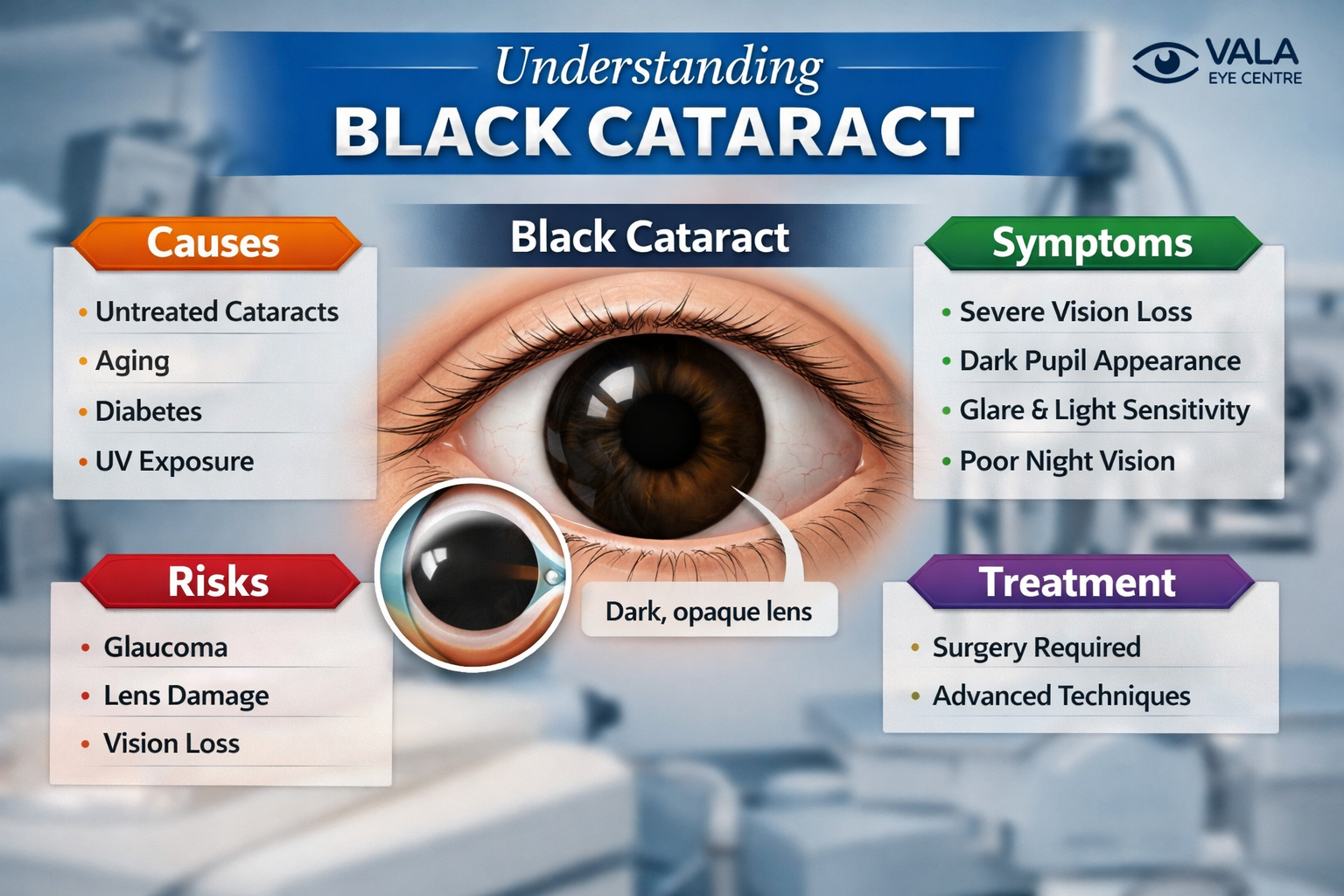
When people hear the word cataract, they usually imagine a cloudy or white appearance in the eye. However, in rare and advanced cases, cataracts can turn dark brown or even black. This condition, commonly referred to as a black cataract, is medically known as a hypermature cataract. At Vala Eye Centre, we often see patients who delay treatment, leading to such advanced stages. Understanding black cataracts is crucial for timely intervention and preserving vision.
What Is a Black Cataract?
black cataract is an extreme progression of a regular cataract, where the eye’s natural lens becomes not just cloudy but deeply pigmented appearing brown or black. This happens when the cataract is left untreated for a long time, causing the lens proteins to harden and oxidize. Unlike early-stage cataracts that only blur vision, black cataracts can severely impair eyesight and make surgical removal more complex.
Why Does a Cataract Turn Black?
A cataract develops when proteins in the eye’s lens break down and clump together. Over time, if untreated, these proteins undergo chemical changes, including oxidation and dehydration.
In advanced stages:
- The lens becomes dense and hardened
- Pigments accumulate, turning it brown or black
- The condition progresses into what doctors call a hypermature cataract
Factors that contribute to the development of black cataracts include:
- Long-standing untreated cataracts
- Aging (common in people above 60)
- Poor access to eye care
- Chronic conditions like diabetes
- Excessive UV exposure
In countries like India, black cataracts are more common in rural populations due to delayed diagnosis and treatment.
Symptoms of Black Cataract
Black cataracts do not develop overnight. They are the result of years of neglect or lack of treatment. Here are the key symptoms:
1. Severe Vision Loss
Vision becomes extremely blurred or almost completely lost. Patients may only perceive light and shadows.
2. Dark Appearance of the Eye Lens
Unlike typical cataracts that appear white or gray, black cataracts may give the pupil a dark brown or black appearance.
3. Difficulty Seeing in Low Light
Night vision becomes nearly impossible.
4. Glare and Light Sensitivity
Bright lights may cause discomfort or halos.
5. Reduced Color Perception
Colors may appear faded or yellowish.
If you notice these symptoms, it’s essential to seek immediate consultation at a specialized eye hospital like Vala Eye Centre.
How Is Black Cataract Diagnosed?
Diagnosis involves a comprehensive eye examination. At Vala Eye Centre, advanced diagnostic tools help identify the stage and severity of the cataract.
Typical diagnostic methods include:
- Slit-lamp examination to assess lens opacity
- Visual acuity test
- Eye pressure measurement
- Retinal examination (if visible)
In some cases, dense black cataracts make it difficult to visualize the retina, requiring additional imaging techniques.
Is Black Cataract Dangerous?
Yes, black cataracts are more than just a vision problem and they can lead to severe complications if left untreated. The longer a cataract remains untreated, the more complex the surgery becomes
Potential Risks:
- Increased intraocular pressure leading to glaucoma
- Lens-induced inflammation
- Risk of permanent vision loss
- Difficulty in surgical removal
Treatment Options for Black Cataract
The only effective treatment for a black cataract is surgical removal of the lens. However, due to the hardness and density of the lens, the procedure requires advanced expertise. Dr Ruchi Vala has several years of experience in treating complex retinal issues and Vala Eye Centre in Vadodara is one of the most advanced hospital for patients needing Ophthalmic Care.
1. Phacoemulsification (Advanced Technique)
In standard cataracts, ultrasound energy is used to break the lens. However, in black cataracts:
- The lens is too hard
- Higher energy is required
- Risk of complications increases
2. Manual Small Incision Cataract Surgery (MSICS)
This technique is often preferred for black cataracts:
- A slightly larger incision is made
- The dense lens is removed manually
- A new artificial intraocular lens (IOL) is implanted
3. Femtosecond Laser-Assisted Surgery
In selected cases, advanced laser technology may be used to assist in precise incisions.
Dr Ruchi Vala At Vala Eye Centre chooses the most suitable method based on the patient’s condition, ensuring safety and optimal outcomes.
Challenges in Black Cataract Surgery
Operating on a black cataract is more complex than a routine cataract surgery.
Key Challenges:
- Extremely hard lens nucleus
- Increased risk of complications
- Limited visibility during surgery
- Longer surgical time
This is why choosing an experienced eye surgeon is critical.
Recovery After Surgery
Despite the complexity, most patients experience significant vision improvement after surgery.
Recovery Timeline:
- Initial recovery: 1–2 weeks
- Full vision stabilization: 4–6 weeks
Post-Surgery Care:
- Use prescribed eye drops
- Avoid rubbing the eyes
- Protect eyes from dust and sunlight
- Attend follow-up visits
At Vala Eye Centre, personalized post-operative care ensures smooth recovery and optimal results.
Can Black Cataracts Be Prevented?
While aging is inevitable, progression to a black cataract can often be prevented with early detection and timely treatment.
Prevention Tips:
- Regular eye check-ups (especially after age 40)
- Control diabetes and other chronic conditions
- Wear UV-protective sunglasses
- Maintain a healthy diet rich in antioxidants
Early cataract surgery is safe, effective, and prevents complications associated with advanced stages.
When Should You See a Doctor?
Do not wait until vision is severely affected. You should consult an eye specialist if you experience:
- Blurred or cloudy vision
- Difficulty reading or driving at night
- Sensitivity to light
- Frequent changes in glasses prescription
Early intervention can prevent the cataract from progressing into a black cataract.
Conclusion
A black cataract is a serious yet preventable stage of cataract progression. It develops when a regular cataract is left untreated for years, leading to severe vision impairment and surgical challenges. The good news is that with modern surgical techniques and expert care, even advanced cataracts can be successfully treated.
The key takeaway is simple: do not delay treatment. Regular eye check-ups and early intervention can save you from complications and restore clear vision. If you or your loved ones are experiencing symptoms of cataract, consult Vala Eye Centre today and take the first step toward better vision.