
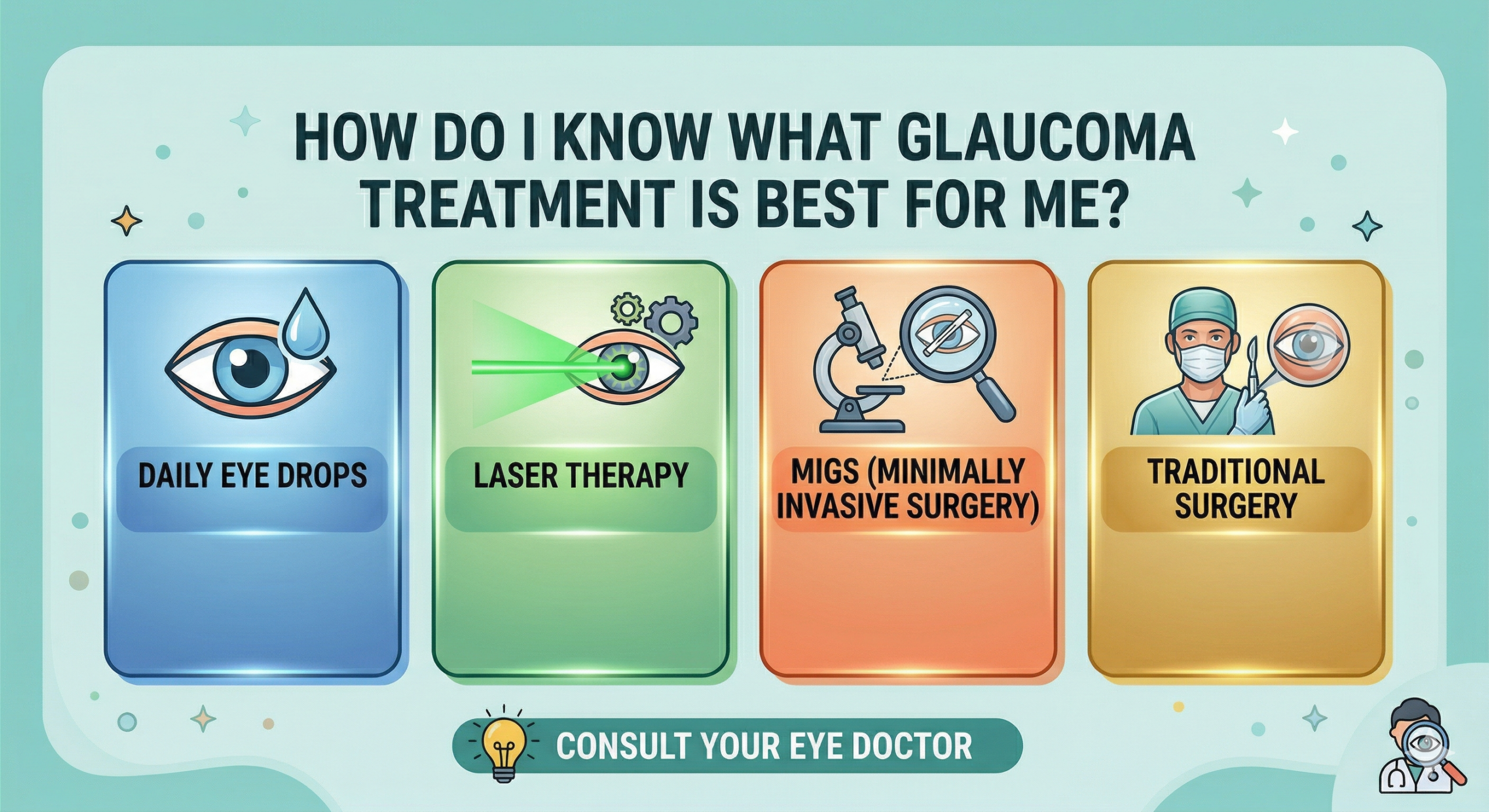
If you or someone close to you has recently been diagnosed with glaucoma, it’s completely normal to feel overwhelmed at first. Often referred to as the “silent thief of sight,” the condition can sound alarming, but the reassuring truth is that while glaucoma is serious, it is highly manageable with timely diagnosis, proper treatment, and consistent care. The most common question people ask after a diagnosis is, “What is the best treatment for me?” The answer isn’t the same for everyone. Choosing a treatment is a journey you take with your eye doctor, based on your specific type of glaucoma, your lifestyle, and how your eyes respond to care. This guide will break down the options in simple terms to help you feel more confident about your eye health.
1. Understanding the Goal: It’s All About the Pressure
To understand glaucoma treatments, it helps to first understand what’s happening inside the eye. Think of your eye like a sink with a running tap and a drain: it continuously produces a clear fluid to stay healthy, but if the drainage system becomes blocked, fluid starts to build up, causing increased intraocular pressure. This elevated pressure presses against the optic nerve, which acts like a cable transmitting visual information from the eye to the brain, and over time, sustained pressure can damage this nerve and lead to vision loss. The primary goal of all glaucoma treatment options whether medication, laser therapy, or surgery is to lower this pressure and protect the optic nerve from further damage.
2. The First Line of Defense: Medicated Eye Drops
For most patients, glaucoma management begins with prescription eye drops, which are the most common and least invasive glaucoma treatment option. These medications work in two primary ways: either by reducing the production of fluid inside the eye, effectively “turning down the tap,” or by improving the outflow of fluid, helping to “clear the drain” and lower intraocular pressure. Eye drops are typically recommended when glaucoma is detected early and eye pressure is not critically high, making them an effective first-line treatment. However, their success depends heavily on consistent daily use, as missing doses can reduce their effectiveness in protecting the optic nerve. For individuals with busy lifestyles or difficulty maintaining a daily routine, it is important to discuss alternative glaucoma treatment options such as laser therapy or long-acting implants with an ophthalmologist to ensure better compliance and long-term vision protection.
3. The Quick Fix: Laser Therapy
In recent years, laser treatment for glaucoma has emerged as a popular first-line option, with many patients choosing it because it can significantly reduce or even eliminate the need for daily glaucoma eye drops for several years. Common procedures include Selective Laser Trabeculoplasty (SLT), typically used for open-angle glaucoma, where a gentle laser stimulates the eye’s natural drainage system to improve fluid outflow, and Laser Peripheral Iridotomy (LPI), used for narrow-angle glaucoma, where a tiny, nearly invisible opening is created in the iris to allow safer fluid movement and prevent pressure buildup. Laser glaucoma therapy is often an excellent choice for patients who experience side effects from medications, such as redness or irritation, or those seeking a more convenient “set-it-and-forget-it” approach. The procedure is quick, usually completed within minutes in a doctor’s office, minimally invasive, and allows patients to resume their normal routine almost immediately, making it a highly effective and convenient option for long-term intraocular pressure control and vision preservation.
4. Modern Miracles: MIGS (Minimally Invasive Surgery)
If glaucoma eye drops and laser therapy are not enough to control intraocular pressure, the next step doesn’t have to be a major or intimidating surgery. A highly effective middle-ground option is Minimally Invasive Glaucoma Surgery (MIGS), which uses advanced microscopic tools and tiny stents—similar to miniature tubes—to help fluid bypass blocked drainage pathways in the eye. This improves fluid outflow and reduces pressure, protecting the optic nerve from further damage. MIGS procedures are especially suitable for patients who are already planning cataract surgery, as the surgeon can conveniently place the stent during the same procedure with minimal additional risk. This combined approach offers a safer, quicker recovery compared to traditional glaucoma surgeries, while delivering long-term eye pressure control and improved vision preservation, making it an increasingly preferred option in modern glaucoma treatment plans.
5. Traditional Surgery: For Advanced Cases
8. The Bottom Line: Consistency is Key
No matter which treatment is “best” for you, the most important factor in saving your vision is you. Glaucoma is a lifelong condition. Whether you are using drops, had a laser procedure, or underwent surgery, you must keep up with your follow-up appointments. Because glaucoma doesn’t “hurt” and you might not notice your vision changing until it’s too late, your doctor is the only one who can verify that the treatment is actually working.